Freeze-dried strawberries are one of the most recognizable products in the freeze-dried fruit category. They keep their bright red color, intense sweetness, and natural aroma while becoming light, crisp, and shelf-stable. For snack producers, they add a premium visual and textural element to mixes and confectionery. For ingredient buyers, they are a lightweight, long-life component for cereals, desserts, and dairy products. This guide explains how a freeze-dried strawberry line works and what it takes to run one well.
Why Freeze-Dry Strawberries
Fresh strawberries are fragile, seasonal, and heavy. Freeze drying removes almost all of their water at low temperature, so the fruit keeps its shape and color instead of shrinking or darkening. The result is a crisp piece that rehydrates quickly and retains a fresh-fruit flavor. Because the finished product is very light, shipping and storage costs drop sharply, and the fruit can be sold year-round regardless of the harvest season.
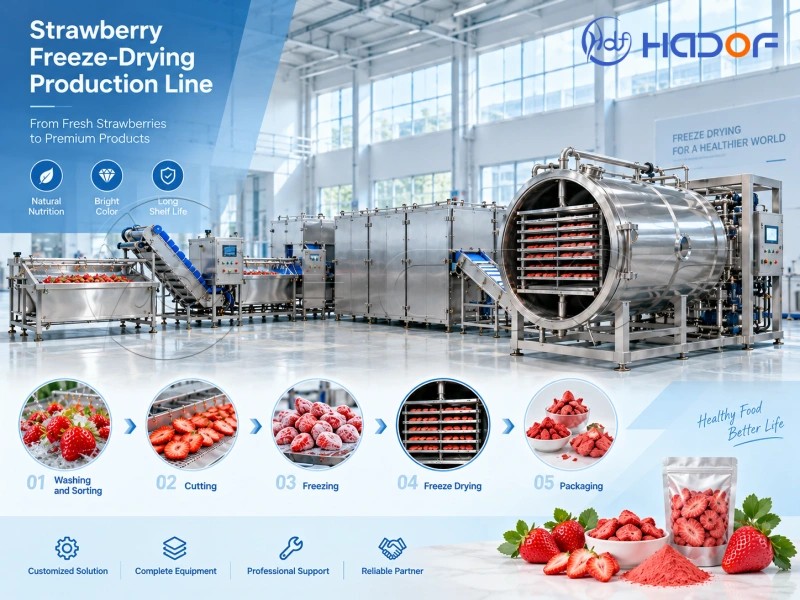
Strawberry Freeze-Drying Production Line for Snacks and Food Ingredients
The Production Process
A commercial freeze-dried strawberry line usually follows this sequence:
- Receiving and washing — fresh strawberries are inspected and gently washed.
- Hulling and cutting — the calyx is removed and the fruit is sliced or kept whole, depending on the target product.
- Pre-freezing — the fruit is frozen quickly to protect texture and color.
- Vacuum freeze drying — ice sublimates directly to vapor at low pressure.
- Sorting and packaging — finished pieces are checked and packed in barrier packaging.
Each step matters. Bruised fruit, slow freezing, or uneven slicing all show up in the final product, so the line must be handled carefully from receiving to packing.
Equipment for the Line
The core of the line is the strawberry freeze-drying production line, which combines washing, preparation, pre-freezing, drying, and packing. The freeze dryer itself determines batch size and cycle time, while the washing and preparation equipment determine how gently the fruit is handled. Because strawberries are delicate, gentle washing and careful hulling are especially important.
Around the dryer, the line needs a pre-freezer or tunnel freezer, trays and loading equipment, and a packing machine. Trays should be arranged so fruit pieces do not touch or clump, because contact points dry more slowly and can create soft spots.
Capacity and Configuration
Capacity is usually specified by batch weight or shelf area. Strawberries are light, so a given shelf area can hold a large number of pieces, but the drying cycle still sets the daily output. Producers often start with a batch size that matches their fresh-fruit supply and then add capacity as demand grows. The right size depends on your product format, packaging, and target output. Under-sizing the dryer leaves fruit waiting and hurts freshness; over-sizing it raises running costs.
Sizing a Freeze-Dried Strawberry Line
Sizing starts with your fresh-fruit supply. How much strawberry can you bring in each day, and how consistent is that supply across the season? The dryer's batch weight and shelf area should match that supply. A line that is too small leaves fruit waiting and hurts freshness; a line that is too large runs at low load and wastes energy. Many producers start with one dryer sized to a comfortable daily batch and plan the washing, hulling, and packing areas so a second dryer can be added later. That approach keeps the initial investment manageable while leaving room to grow into a larger share of the snack and ingredient market.
Hygiene and Food Safety
Even though freeze-dried fruit is shelf-stable, the line still needs food-safe handling. Washing water should be clean and controlled, contact surfaces should be easy to clean, and the drying chamber should be kept free of debris between batches. Packaging areas should be dry and protected from moisture, and batch records should link fruit lots, freezing conditions, drying parameters, and packaging dates. Planning these requirements at the start makes it easier to meet retail and export standards later.
Quality Control
Quality control starts with the raw material. Strawberries should be ripe but firm, with consistent color and size. Gentle washing reduces damage, and hulling should remove the calyx cleanly without tearing the fruit. The freeze-drying process should be logged for pressure, shelf temperature, and cycle time, and finished pieces should be tested for moisture, color, and crispness. Because the product is hygroscopic, packing and storage conditions matter as much as the drying step.
Packaging and Shelf Life
Freeze-dried strawberries absorb moisture quickly, so packaging is critical. Moisture-barrier bags, pouches, or tubs protect the product from humidity, and nitrogen flushing can extend shelf life further. Packaging also shapes the consumer experience: clear windows show off the bright color and crisp texture, while resealable pouches keep the fruit crisp after opening. Bag size is a marketing decision, because buyers often want small trial packs as well as larger value packs.
Common Mistakes to Avoid
The first mistake is using fruit that is already bruised or over-ripe, which leads to poor color and soft texture. The second is freezing too slowly, which produces large ice crystals and damages the fruit. The third is overloading trays or letting pieces touch, which blocks vapor flow and creates uneven drying. The fourth is under-sizing the condenser, so the cycle slows down and energy use rises. Finally, poor packaging lets the fruit absorb moisture and lose its crunch within days.
Conclusion
Freeze-dried strawberries are a premium product with clear markets in snacks, cereals, desserts, and ingredient blends. The line is straightforward — wash, hull, freeze, dry, and pack — but each stage must be designed around the delicate nature of the fruit. HADOF Food Processing Manufacture designs complete production lines and industrial freeze dryers for freeze-dried strawberries. Tell us your product format and target output, and we will help you plan the right line.