Caking is a common challenge in water soluble fertilizer manufacturing. Hygroscopic raw materials can absorb moisture during processing and storage, forming hard lumps that affect mixing, packaging, and product quality.
For commercial fertilizer manufacturers, controlling humidity, material preparation, and equipment design helps maintain consistent powder quality.
1. Control Raw Material Moisture
A powdery soluble fertilizer production line typically processes urea, MAP, MKP, potassium nitrate, potassium sulfate, and micronutrients.
However, these ingredients have different moisture absorption characteristics. Therefore, manufacturers should inspect incoming materials and store them in dry, sealed conditions.
Moreover, maintaining suitable workshop humidity helps reduce moisture absorption during feeding, batching, and mixing.
2. Improve Batching and Mixing Uniformity
For an NPK 20-20-20 water soluble fertilizer blending plant, accurate batching and uniform mixing are essential.
Uneven distribution of ingredients may create localized areas with different moisture absorption behavior.
Therefore, automatic weighing systems and suitable powder mixers help maintain consistent formulations. Additionally, manufacturers should control mixing time and avoid unnecessary material exposure.
3. Optimize Equipment Design to Reduce Caking
The anti-caking design of water soluble fertilizer making system should consider the entire production process.
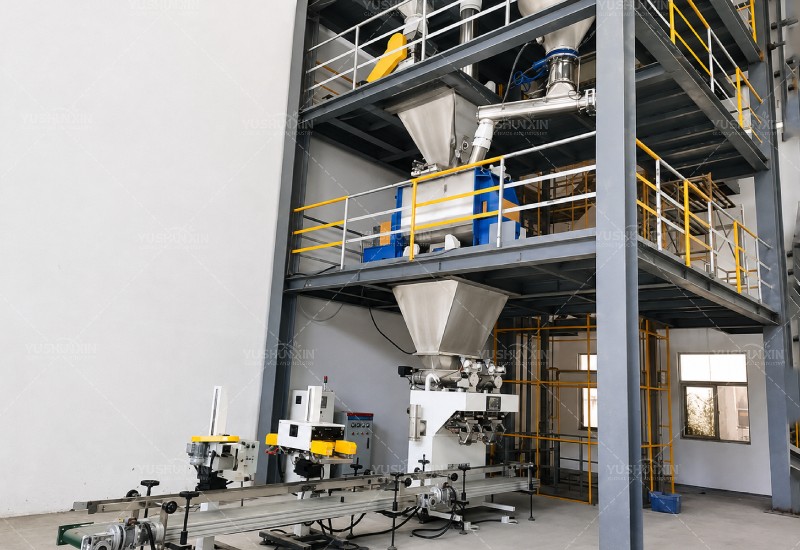
For example, enclosed conveyors reduce exposure to humid air, while suitable crushers break existing lumps before mixing.
Furthermore, smooth material-contact surfaces and properly designed discharge outlets help prevent powder accumulation.
For reference, hygroscopicity describes the tendency of materials to absorb moisture from their surroundings.
4. Reduce Moisture Exposure During Packaging
A 5 TPH water soluble fertilizer manufacturing line can integrate automatic batching, mixing, screening, and packaging equipment.
However, even properly mixed fertilizer may cake if it remains exposed to humid air before packaging.
Therefore, manufacturers should minimize storage time in open hoppers and use suitable moisture-barrier packaging.
For more equipment configuration details, visit: https://www.fertilizerbusinessplan.com/water-soluble-fertilizer-production-solution/
5. Choose Equipment Based on Your Formulation
Different NPK formulations require different moisture-control strategies. Consequently, equipment selection should consider raw material hygroscopicity, workshop conditions, production capacity, and packaging requirements.
A reliable water soluble fertilizer production equipment manufacturer can help evaluate these factors and recommend suitable equipment configurations.
Explore our water soluble fertilizer production solutions to plan a manufacturing system that reduces caking risks and supports consistent product quality.