A biomass granulator can press crop straw, wood chips, rice husks, and sawdust into dense pellets. For fertilizer projects, the same flat die pellet press can also handle fermented organic materials after you adjust moisture and particle size. The machine uses rollers and a flat die to form uniform pellets without a drying step. Your team can use this equipment to create a compact fertilizer production line that turns waste into a saleable pellet product.
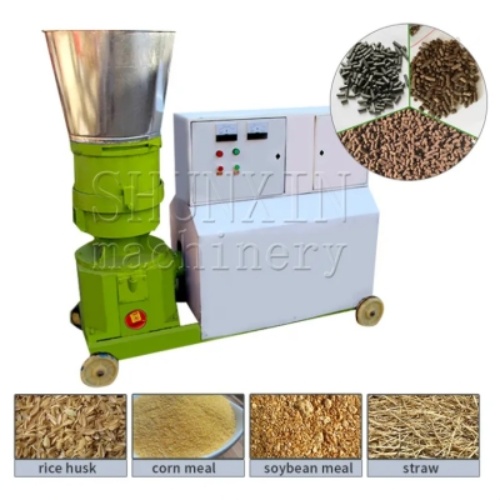
biomass granulator
Can a biomass granulator process crop straw, wood chips, rice husks, and sawdust for fertilizer pellet projects?
You can feed crop straw, wood chips, rice husks, and sawdust into a flat die pellet press after crushing. The rollers compress the material through die holes, and friction heat softens the natural lignin so the pellets bind without added chemicals. For fertilizer projects, your workers can also process chicken manure and crop straw after fermentation and moisture control. This flexibility lets a organic fertilizer extrusion production line handle both biomass fuel material and composted fertilizer input. Your operators can change the die size to produce the pellet diameter that the market requires.
How does a flat die pellet press form organic and biomass pellets?
The hopper drops raw material onto a rotating flat die. Rollers then press the material through the die holes, and a cutting mechanism trims the emerging pellets to the required length. The compression generates heat and increases pellet density, which makes storage and transport easier. Your team can control the feed rate so the rollers do not overload the die. After cutting, the pellets cool and move to a screening or packaging station. This fertilizer extrusion technology produces a uniform shape with low dust and consistent moisture. The same process can support a chicken manure processing line when the manure has fermented and dried to the correct moisture range.
Which equipment supports a biomass granulation machine in a fertilizer manufacturing system?
A crusher, a mixer, a feeder, the flat die pellet press, a screen, and a packaging machine can form a complete system. The crusher reduces straw and wood chips to a uniform size, and the mixer blends different organic materials before pressing. A steady feeder keeps the die full without surges, while the screen removes fine particles and returns them to the feed. This arrangement gives your fertilizer machinery a continuous flow and reduces manual handling. You can also add a conveyor between stations to keep production speed consistent. A reliable organic fertilizer extrusion technology helps your team build a line that matches both pellet fuel and fertilizer pellet demand.
How can plant owners use biomass granulation to build a fertilizer production line?
You can start with the input materials and output pellet diameter, then select the crusher, press, and screen that match that capacity. A simple layout keeps the fertilizer manufacturing process short and makes maintenance easier. You can review the organic fertilizer article for background on composted materials. A fertilizer machinery manufacturer can provide power data, die sizes, and process drawings for your project. This planning gives your team a clear route from raw biomass or organic waste to finished pellets.
Yushunxin can supply flat die pellet presses and supporting equipment for biomass and organic fertilizer pellet projects. If your team has interest in the machine, you can learn more about https://www.extruder-granulator.com/biomass-granulator.