Turning animal waste into plant nutrition has become a key trend in sustainable agriculture. Among various organic resources, cow dung stands out for its nutrient stability and availability. Converting it into liquid organic fertilizer not only helps reduce pollution but also provides an efficient nutrient source for crops. Let’s explore how the cow manure liquid fertilizer production process works in real practice.
Understanding the Raw Material
Fresh cow dung contains about 0.4–0.6% nitrogen, 0.3% phosphorus, and 0.4% potassium, as well as a rich microbial base. However, it also includes excessive moisture and organic residues that must be stabilized before use. For most producers, this means separating the solids and liquids first and then fermenting the liquid portion under controlled conditions.
Core Process of Liquid Fertilizer Production
The liquid fertilizer manufacturing process generally includes the following stages:
- Solid–liquid separation
A screw-type separator removes fiber and sand from fresh manure, reducing the solid content to below 5%. The filtrate becomes the main raw liquid for further fermentation. - Anaerobic fermentation
The liquid is pumped into an anaerobic fermentation tank, where it stays for 15–20 days at 35–40°C. Inside the tank, beneficial microbes decompose organic matter, turning it into bioavailable nutrients and microbial metabolites. - Nutrient adjustment
Before storage or dilution, the fermented liquid may be enriched with trace elements such as zinc, magnesium, or humic acid to balance the NPK ratio. - Filtration and packaging
Fine filtration removes residues or floating materials. The finished cow dung liquid fertilizer can then be stored in plastic drums or IBC tanks for field application. Learn more!
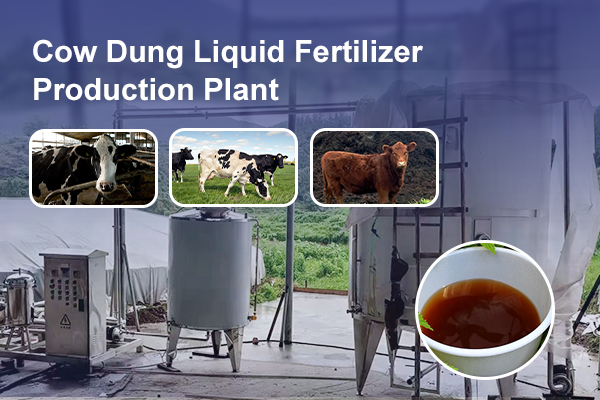
Equipment Commonly Used in Cow Dung Liquid Fertilizer Plants
While the process seems simple, equipment selection determines the stability and efficiency of production.
A typical cow dung liquid fertilizer production line includes:
- Solid–liquid separator (for initial sludge treatment)
- Anaerobic or aerobic fermentation tank (for microbial decomposition)
- Mixing and nutrient dosing tank
- Fine filtration system and liquid filling machine
For large-scale dairy farms, automation systems can help maintain temperature and pH stability during fermentation. YUSHUNXIN can offer you the related liquid fertilizer production equipment depending your badget.
Final Thought
Converting cow manure into liquid fertilizer is not just waste recycling—it’s a process of transforming byproducts into agricultural value. By using the right liquid fertilizer making equipment and managing microbial activity carefully, producers can achieve consistent quality, low odor, and high nutrient efficiency suitable for modern sustainable farming. If you need a business plan, welcome to visit: https://www.liquidfertilizerplants.com/products/cow-dung-liquid-fertilizer-production/