A salad factory, a root vegetable plant, or a snack maker that slices produce continuously usually wants to know how much electricity the cutting step adds. The fruit and vegetable slicer for a continuous line uses a centrifugal rotor to push produce against a blade group, and its energy use stays modest while it keeps output steady. This article explains the energy drivers for a food processing step.
How Does the Centrifugal Cutting Principle Work?
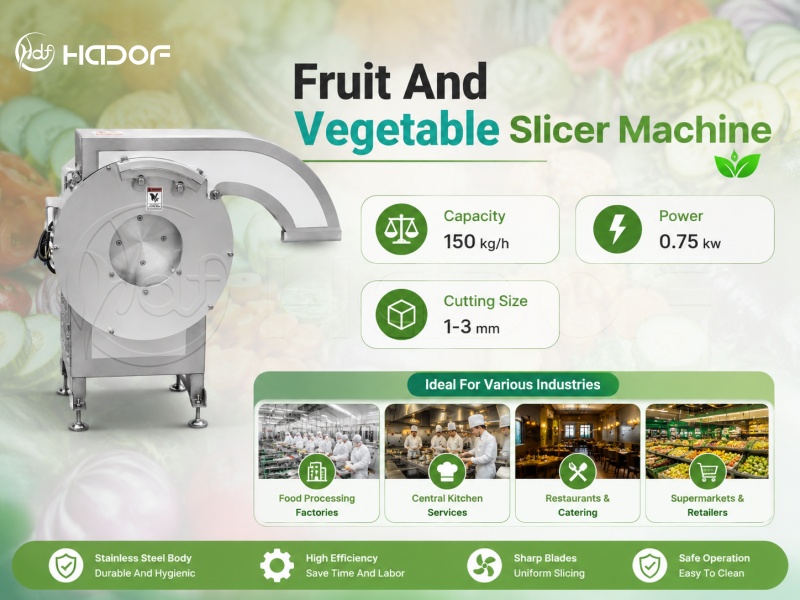
The motor drives a centrifugal rotor, and centrifugal force pushes ginger and root vegetables toward the blade group, so the cutting happens in one pass. The centrifugal fruit and vegetable slicer for a line produces uniform strips and slices without a back-and-forth motion, which keeps the motor load steady. This single-pass design keeps the food manufacturing energy low compared to a chopper.
How Does Throughput Affect Energy Per Kilogram?
Energy per kilogram falls when the slicer keeps a steady rate, because the motor runs efficiently at its working speed instead of starting and stopping. The vegetable slicer with adjustable cutting sizes supports 1 mm to 3 mm settings, so a factory can match the cut to the product and keep the line moving. A full shift at a steady rate keeps the food equipment energy cost low.
How Does the Slicer Connect With Washing and Freezing?
A slicer works best when the washed produce arrives on a belt and the cut pieces leave directly to the next stage. The machine connects with washing lines, blanching systems, freezing tunnels, or packaging lines, and each handoff needs a matched speed. A smooth connection prevents the pile-ups that idle the slicer and waste energy.
How Should a Plant Measure the Operating Cost?
A plant measures the slicer energy by the motor power, the shift hours, and the kilograms cut, then compares that to the manual cutting it replaced. A steady centrifugal cut also reduces the rework that hand slicing causes. This comparison turns the food machinery decision into a clear energy figure.
How Should a Buyer Verify the Slicer?
Vegetable slicing rewards a trial with the plant's own produce, because hardness changes the cut and the load. You can review the fruit and vegetable slicer manufacturer before a purchase, and that review shows the blade and service support. A measured run confirms the food equipment energy and the cut quality.
How Does Blade Sharpness Affect Energy and Quality?
A sharp blade cuts the produce in one pass, so the motor works less and the cut stays clean, while a dull blade forces the rotor and crushes the surface. The centrifugal slicer lets the operator change the blade and check the edge on a schedule, which keeps the energy draw low and the slices uniform. A clean cut holds less moisture loss and protects the finished appearance. This maintenance detail is part of the food equipment energy picture, because a sharp blade lowers both power and rework. A related air dryer for sliced produce completes the same processing line.
Conclusion
A fruit and vegetable slicer uses its energy mainly in the centrifugal rotor, and a steady throughput plus a matched line connection keeps the energy per kilogram low. These choices keep the food production line efficient. If you have interests, you can learn more about https://www.hadofps.com/products/fruit-and-vegetable-slicer-machine/