When producing liquid biofertilizer, many manufacturers eventually face two common issues: unexpected sediments or an unpleasant smell in the final product. Whether you are making bio-liquid fertilizer, microbial liquid fertilizer, or organic liquid nutrient solutions, these symptoms usually indicate that something in the process is unstable. Below is a practical troubleshooting guide that helps producers identify the root cause—and optimize their production system for more stable, high-quality results.
1. Sediments: Why They Form and How to Prevent Them
Sediment formation is one of the most frequent concerns in liquid biofertilizer production lines. Sediments can appear as fine particles, sludge-like layers, or visible precipitates. The most common causes include:
• Incomplete fermentation
Organic waste or manure-based materials must be fully decomposed. When the fermentation stage is too short or temperature control is unstable, undigested fibers and residues settle at the bottom.
• Improper filtration
Even well-fermented microbial fertilizers contain small particles. Without a proper solid–liquid separator, mesh filter, or bag filter, these particles accumulate and form visible sediments over time.
• Chemical precipitation
If minerals, micronutrients, or pH adjusters are added without proper mixing, they may react and form insoluble compounds. This is common in nutrient-rich bio-liquid fertilizer formulas.
Solutions
- Extend fermentation time or stabilize temperature profiles
- Add secondary screening (100–200 mesh filters)
- Use a screw-type solid–liquid separation system before storage
- Adjust pH gradually to minimize precipitation
2. Odor Problems: What They Indicate
A well-made liquid organic biofertilizer should have a mild, fermented smell—not a pungent or rotten odor. If strong odors occur, they often point to:
• Anaerobic spoilage
When tanks are not sealed properly or aeration is insufficient, harmful anaerobic microbes grow rapidly, causing sulfur-type smells.
• Contamination during inoculation
If beneficial microbial strains are added in non-sterile conditions, competing bacteria can take over and generate unpleasant odors.
• Residual ammonia volatilization
Fresh manure with high nitrogen content may release strong ammonia smells if not pre-treated correctly.
Solutions
- Use closed fermentation tanks with stable aeration
- Sterilize or disinfect mixing tanks before inoculation
- Pre-ferment manure to reduce volatile ammonia
- Maintain pH between 6.5–7.5 for microbial stability
3. How Proper Equipment Helps Ensure Stable Quality
Although process management plays a major role, choosing suitable equipment significantly reduces quality problems. Many producers now standardize production with:
- Closed-type fermentation tanks for odor control
- Solid–liquid separators to remove fine impurities
- High-shear mixing tanks for uniform nutrient dissolution
- Inline filtration units to stabilize the final appearance
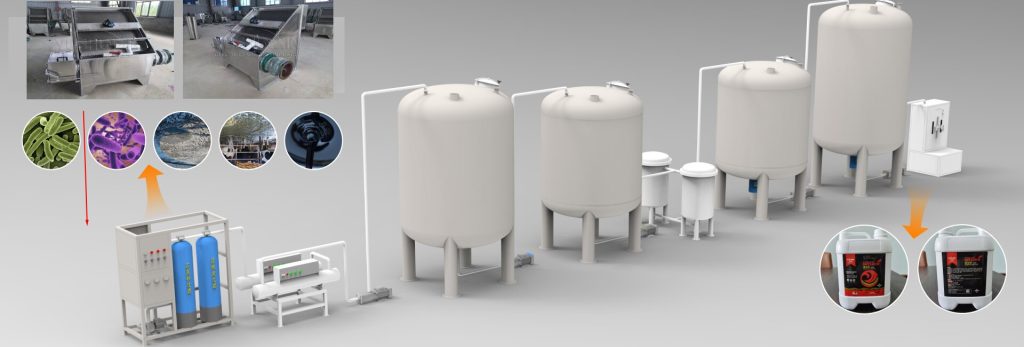
A well-designed liquid biofertilizer production system not only improves product clarity but also protects the viability of beneficial microbes, ensuring long-term shelf stability. If you want to know more, welcome to visit : https://www.biofertilizerproduction.com/product/liquid-biofertilizer-production-technology/